
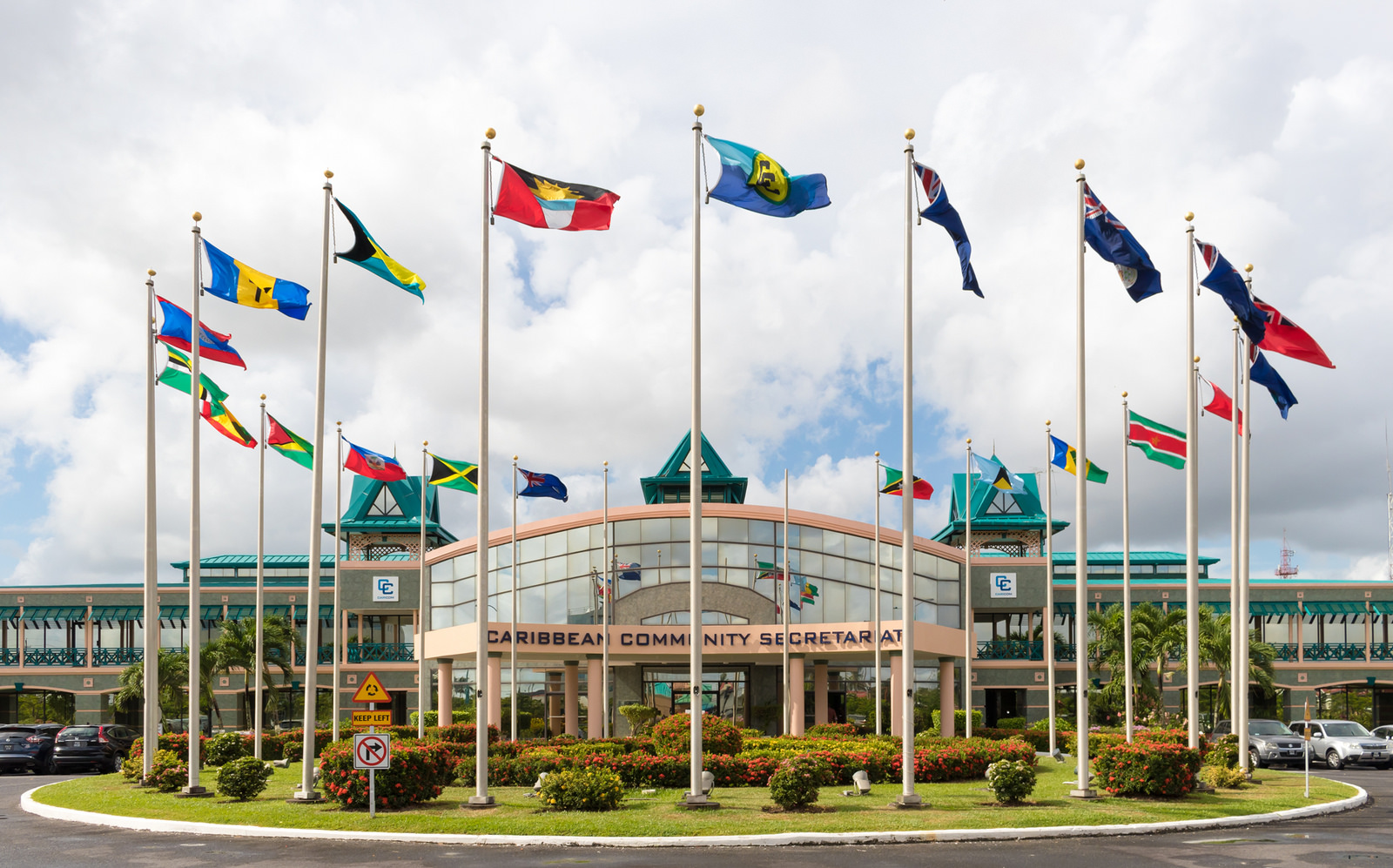

Due to our seemingly diminutive physical size, actual weak economic performance and lacking cultural importance in the world, it is safe to say that we in the Caribbean consider our sovereignty malleable. By malleable I mean divisible. We treat our sovereignty as though we can and should trade pieces of it for inclusion in spaces of opportunity which inevitably subdue us to the Will of those who control those climes. The way we behave towards that thing which keeps us free arises from the assumption that our apparent weakness means that, unlike Great Powers or even Middling Powers, we “non-Powers” should accept the falsehood that claims of sovereignty are all but worthless to us.
After all, we have no means of waging war and war, in all honesty, is the principal and reserve means of safeguarding and enforcing sovereignty so why not trade on what you don’t have? Of course, if you are trading on what you don’t have you are either fooling others or fooling yourself. The fact that you can sell it and others desire it from you means you have it and it is valuable. We should, therefore, reconsider the conditions under which malleable sovereignty is useful to us and when it is not.
Now more than ever, we need to assert our sovereignty and it is in our interest that we do so even more fervently than a great power would because without sovereignty we are nothing.
Good domestic, regional and foreign policy demand strong adherence to the principle of sovereignty. In particular; its inviolability. The fact that we devise it so easily evidences the reality that we are not a mature country and our region is yet a mature civilisation.
It pains me to say it but we are not yet a serious country. Serious countries guard their sovereignty jealously. They weigh the effect of loosed control over their operations and the livelihoods of their citizens with great care. They do not hop on every treaty lightly and they do not use the veil of regionalism as an excuse for poor domestic policy.
While the world’s nations, countries and civilisations are increasingly inter-dependent no serious country enacts policy of dependence. Every serious country knows that far worse than physical wars are the economic, cultural and ultimately psychological & civilisational theatres of war that are always afoot.
If we as a country and a region are to prosper – in spite of our weaknesses – we must watch the beds in which we lay. That means even reconsidering the Caribbean Court of Justice (CCJ) as our ultimate court-of-appeal. I am not saying that we should remove the CCJ’s appellate jurisdiction but I am saying that there must be an advantage to it that bolsters our material interests for it to make sense.
See? This is not an argument for petty nationalism but an argument for shrewd regional policy of material benefit to us as a country. If it is in our national interest to have the CCJ as our final court – in spite of its complete lack of appreciation for the impact its judgments have on our domestic landscape – then so be it.
The same can be said for the entire Caribbean Community (CARICOM) project, our place in the Organisation of American States (OAS) and, more importantly, the Commonwealth of Nations.
Common sense demands that if we are going to stay close to the oppressor we could at least see maximal benefit. Yet, for all of the power our region has in determining who becomes the Commonwealth’s Secretary-General we cannot determine who is its Head, they send their unwanted citizens of our descent here like we are a pig trough, and we can’t even get reparations for colonial slavery though they lament how horrible it was.
Why then give up sovereignty for no real power?


0 Comments